







What Netsuite warehouse management can do for your business
In practice, that means total control over the journey from inbound receiving and putaway through to picking, packing and despatch - with every transaction automatically updating inventory levels and financials. Annexa has implemented NetSuite warehouse management for businesses across ANZ, including high-growth wholesale, retail and manufacturing brands.
-
Get a NetSuite pricing estimate
Let Annexa, Australia and New Zealand’s most experienced NetSuite implementation partners, prepare a tailored pricing estimate for your organisation.
Core features of Netsuite warehouse management
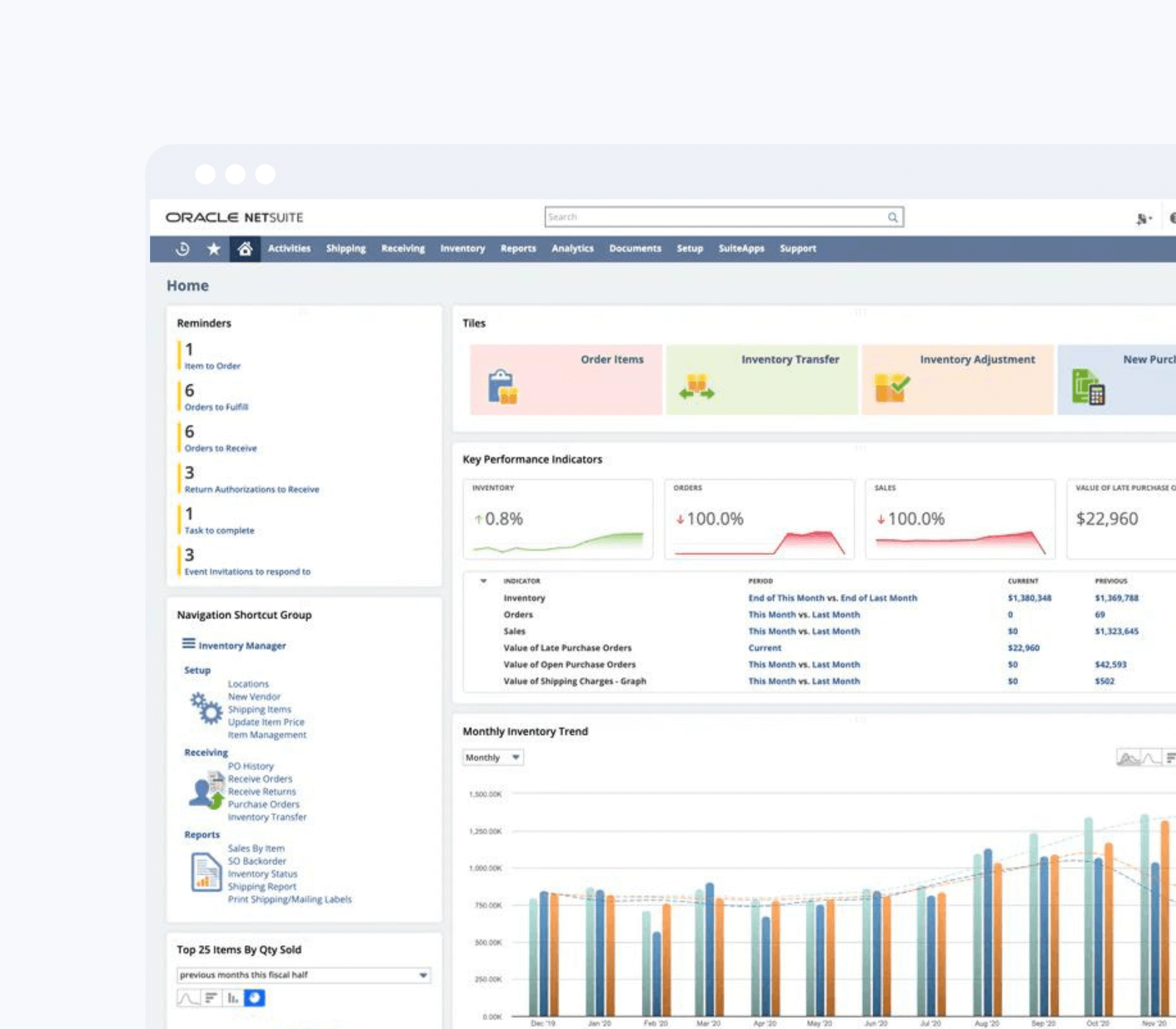
An intuitive, insightful WMS
-
Minimise waste & cost
Introduce better space, inventory and labour, and pinpoint bottlenecks and inefficient processes.
-
Reduce human error
Create simple, efficient practices for putaway, picking and packing to boost order accuracy and minimise time spent walking across the warehouse.
-
Complete visibility
Use lot and batch numbers to trace inventory at every stage of its supply chain journey.

Who is NetSuite Warehouse Management for?
NetSuite Warehouse Management is designed for Australian and New Zealand businesses that manage significant inventory through a warehouse or distribution centre and need greater accuracy, efficiency, and visibility across their inbound and outbound operations.
-
Wholesale distributors that process high volumes of inbound purchase orders requiring automated receiving and three-way matching.
-
E-commerce businesses with in-house fulfilment operations.
-
Manufacturers with finished goods warehouses or raw material stores.
-
Retailers operating distribution centres that supply retail stores or fulfil.
-
Businesses operating multiple warehouse locations.
-
Growing businesses whose warehouse operations.






Why choose Annexa?
At Annexa, we combine deep Oracle NetSuite ERP expertise with a practical, people-first approach. We work alongside your team to deliver implementations that are built to last and designed to evolve as your business grows.
- Over a decade as a leading Oracle NetSuite Solution Provider across Australia and New Zealand
- Proven delivery across complex ERP implementations, integrations and multi-entity environments
- A structured implementation methodology shaped by real-world customer outcomes
- One of the most highly certified NetSuite teams in the region, spanning finance, technical and integration specialists
- Ongoing optimisation and advisory services to help customers keep extracting value from NetSuite
Collaboration sits at the centre of how we work. We build long-term partnerships with our customers, acting as an extension of their team to support growth, change and continuous improvement.





Industries we work with
RESOURCES
Customer stories
let’s chat
Progress starts with engaging conversations.
Reach us via the online chat, the form, or give us a call.
- ✓ NetSuite ecosystem experts
- ✓ Leaders in integration
- ✓ Award-winning team
- ✓ Strategic partner network
- ✓ Innovation always
Frequently asked questions
Standard NetSuite inventory management tracks stock quantities and values at the item and location level, which is sufficient for businesses with straightforward inventory requirements. NetSuite Warehouse Management extends this with bin-level tracking, mobile scanning for warehouse transactions, directed putaway and picking, and scan-verified fulfilment workflows. WMS is designed for businesses operating a physical warehouse where operational efficiency and inventory accuracy at the bin level are important to the business.
NetSuite WMS is designed to work with mobile scanning devices running a browser-based interface. Compatible devices include handheld barcode scanners and mobile computers from standard hardware suppliers. Barcode label printers are typically required for bin labelling and item labelling. Annexa will advise on compatible hardware options during the implementation scoping process based on your warehouse environment and budget.
Yes. NetSuite supports multiple warehouse locations within a single environment, each with its own bin structure, putaway rules, and picking workflows. Stock transfers between locations are managed within NetSuite with a full audit trail, and inventory visibility across all locations is available in real time from a consolidated view or at the individual location level.
NetSuite is used by businesses of all sizes, from startups to rapidly growing companies. If you’re considering making the switch but unsure about the cost, here’s a quick breakdown.
NetSuite operates on an annual subscription model, which includes three key components: the core platform, optional modules, and the number of users. There’s also a one-time implementation fee for the initial setup. As your business expands, you can easily add new modules and users, thanks to the flexibility of cloud software.
NetSuite Warehouse Management is available as an add-on module to the core NetSuite platform, with pricing dependent on your existing licence structure and the scale of your warehouse operation.
Want to get a NetSuite pricing estimate? Contact us now to discuss your specific needs.
NetSuite supports integration with third-party shipping and carrier management systems, allowing shipment bookings, tracking numbers, and freight costs to be managed in connection with NetSuite sales orders and fulfilment records. The specific integrations available depend on your carriers and shipping requirements. Annexa will identify and configure the appropriate shipping integrations as part of the WMS implementation.
Yes. NetSuite WMS works in conjunction with NetSuite’s lot and serial number tracking capabilities, allowing businesses to track specific lots or serial numbers through receiving, putaway, picking, and despatch. This is particularly important for businesses with food safety, pharmaceutical, or electronics traceability requirements that need to demonstrate the movement of specific batches or units through the supply chain.
NetSuite WMS implementations typically range from 3 to 6 months depending on the complexity of the warehouse operation, the number of locations, the volume of bin data to be set up, and the extent of hardware infrastructure required. The cutover phase requires careful planning to ensure stock location data is accurate before the system goes live. Annexa will provide a detailed implementation timeline based on a thorough review of your warehouse requirements during the scoping process.
Migrating to bin-level tracking requires a physical stock count and bin assignment as part of the cutover process to ensure that every item in the warehouse has an accurate location recorded in NetSuite before the WMS goes live. Annexa plans and manages this cutover process as a structured phase of the implementation, typically coordinated during a planned period of reduced warehouse activity to minimise disruption.
As NetSuite’s 2024 ANZ Growth Partner of the Year, Annexa provides comprehensive support including implementation, configuration, ongoing support, and strategic guidance, all delivered by an Australian and New Zealand-based team with hands-on experience implementing NetSuite WMS across warehouse and distribution operations of varying scale and complexity.