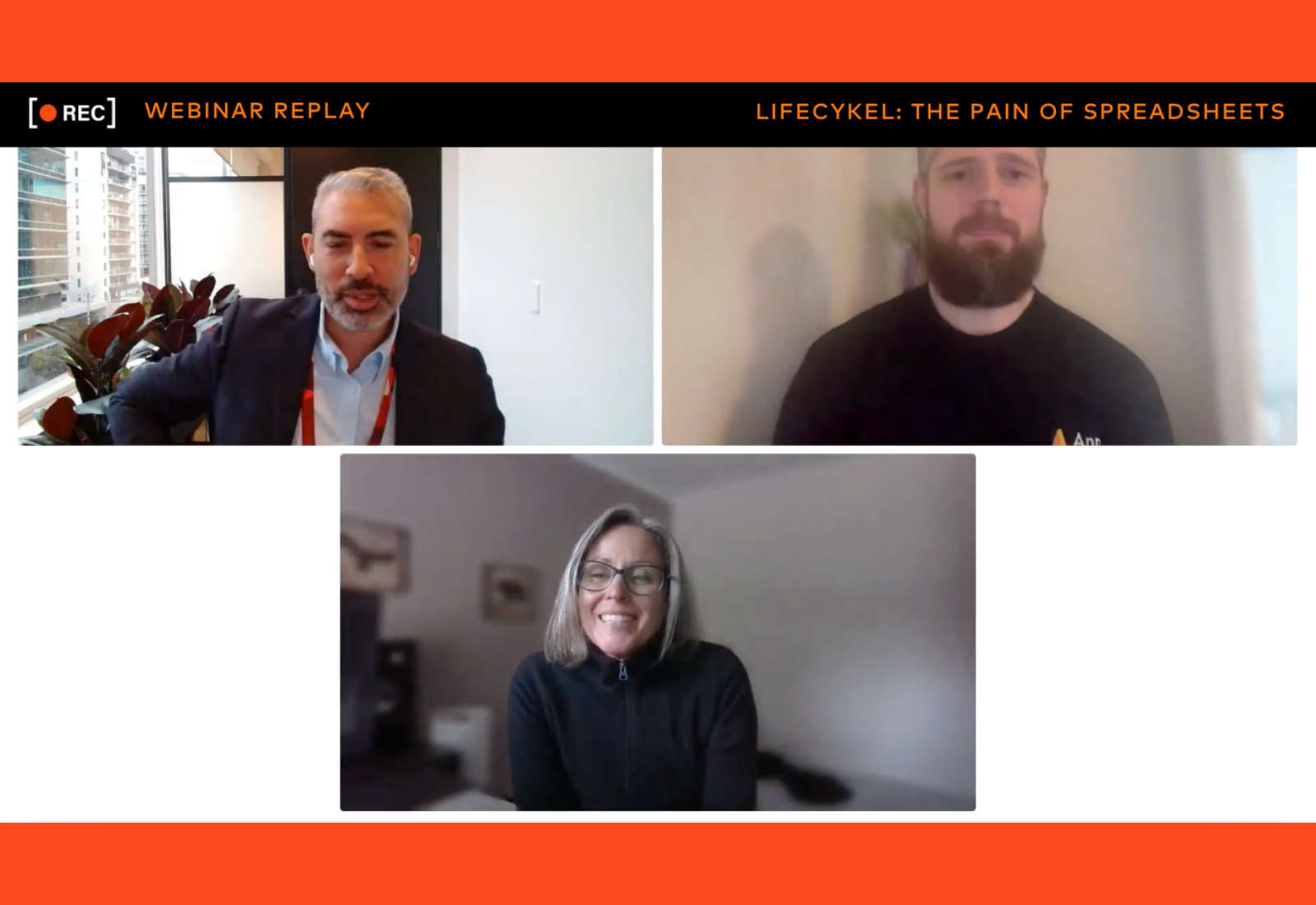

Our August webinar was a conversation with a finance manager who has already made the move from Xero to NetSuite, in front of an audience largely still weighing it up. Here we cover what Lifecykel’s setup looked like beforehand, the signals that a growing business has outgrown what Xero can hold, the technical work the migration involved and what changed for the finance team after go live.
You can also watch the full webinar on-demand here.
TL;DR
- Lifecykel, a fast-growing mushroom biotech business outgrew Xero across multiple entities and moved to NetSuite with Annexa.
- Traceability was the driver, since US retailers and food safety certification demand a level of recall that Xero could not support.
- Most of the migration work sat in manufacturing and inventory, and the business kept trading throughout.
- Since go live, the business has visibility from raw material to finished product, with consolidation inside the system.
Ananda Iyer, Head of Customer Success at Annexa, hosted the session with solution architect Will Goodbourn and Nelli Penzes, Finance Manager at Lifecykel.
Lifecykel is a global mushroom biotech business founded in 2015. Extract production runs from a company-owned facility in the US, with drums shipped into Australia and bottling outsourced in both markets. Sales go through three Shopify stores, Amazon and Walmart, wholesale and EDI into US retail, reaching more than 120 countries. Nelli joined Lifecykel shortly before the NetSuite decision was made and acted as project manager for the transition, having spent around five years on NetSuite at a previous manufacturer.
Seven or eight instances of Xero and a drive full of spreadsheets
“Every single entity we had, we had to have a Xero for, so that was seven or eight instances, and then everything the system couldn’t hold was tracked in a spreadsheet somewhere.”
Nelli Penzes, Finance Manager, Lifecykel
Most of the business had no access to Xero, so purchase orders were raised in spreadsheets with no numbering and an incoming invoice would circulate for confirmation of who ordered what, with no purchase order and receipt to match it against. Reporting had to be produced entity by entity, with reconciliation and consolidation handled in a separate tool. Behind all of it sat around 200 shared spreadsheets with no folder structure, which turned stock takes into monthly arguments about numbers nobody could trace.
The signals that a business has outgrown Xero
Will set out the patterns Annexa sees most often in a first meeting. Seven in ten of the customers who come to Annexa are running Xero, it’s a familiar conversation.
- A second entity. A new country, an acquisition or a separated trading arm gets a second Xero instance, then a third, each with its own login, chart of accounts, subscription and version of the truth.
- A stack of add-ons patching gaps. A stock tool, a consolidation tool and something for approvals can each be a strong app on its own, without talking to each other. Every one is another subscription, another integration to maintain and another place the numbers can disagree.
- A long month-end close. Teams losing days or whole weeks at month end are usually losing them to manual consolidation, pulling each entity’s trial balance into a spreadsheet or a separate tool and stitching it together before anyone can look at the numbers.
- Production and inventory complexity. High SKU counts, batch tracking, multi-location stock and any kind of real manufacturing sit outside what a general ledger was designed to do. Xero records what you bought and what you sold, with no record of what a raw material became.
- Compliance and certification. Once a customer asks for traceability evidence the business cannot demonstrate, this stops being a productivity conversation and becomes a hard limit on who you can sell to.
Will’s rule of thumb is that recognising two or three of these puts a business in the window for a move.
Traceability was a requirement for trading with US retailers
The most pressing requirement at Lifecykel was product recall. A retailer needs the business to trace a product right through to the shelf, not just back to the drum it came from, and food safety certification under HACCP sits alongside organic and non-GMO certification in requiring a mock recall at any time.
“In Xero, stock would just appear, with no way to trace it back to when it was made or where the raw material came from.”
Nelli Penzes, Finance Manager, Lifecykel
NetSuite holds batch and lot traceability in the core inventory engine, so recall management upstream and downstream is standard behaviour and not an add-on. Nelli credits that capability with opening US retail to the business.
What the migration involved
Manufacturing was the largest piece of work, since Xero held nothing and every item and bill of materials had to be built from a standing start. Finance was better prepared, with a template mapping the trial balances out of Xero account by account and several practice runs of the upload before go live. The stock take was rebuilt to a level of detail the warehouse teams had never produced, covering every product, best-before date, batch number and quantity.
Trading through the cutover is the part Nelli says everyone underestimates. There was no Shopify sandbox and no third-party logistics sandbox, only their own NetSuite sandbox, and the 3PL was already live and connected to Shopify, so this was never a case of testing too little. A lot of it could not be tested in advance at all. The team ran about five days of overlap at go live, with the chart of accounts and an accurate inventory position as the two things that had to be right on the day.
“You do need to know exactly when to cut over, and make sure your inventory is completely accurate before you do.”
Nelli Penzes, Finance Manager, Lifecykel
Annexa had a consultant on the ground in the US for go live and two more on call in Australia. Nelli’s advice on working with a partner was to be honest with them and walk them through every step of what you actually do, with nothing waved away. Will made the same point from the partner’s side – an implementation always needs real time from your team, mostly decisions in the early stages and testing later in the project, so any partner who says they will barely need your people is a warning sign.
What changed once the business was live
The biggest change is visibility of where products are and the traceability problem that had blocked US retail is now solved. Month-end has not disappeared and several parts of it are much easier, with the fixed asset manager and amortisation schedules running on a search and a button. Reporting also changed, with the team no longer reconciling between entities in a separate tool or rebuilding a consolidated balance sheet outside the system.
Around the core platform, Lifecykel runs Zone Capture for vendor bills, Zone Reconcile for the volume of Shopify payouts that need matching and SPS Commerce for EDI into US retailers. This type of third party platform pattern is common across NetSuite implementations, where the platform sits at the core and other applications plug into it wherever more depth is needed.
Advice for finance teams weighing the move
Someone inside the business needs to learn the system properly and enjoy doing it, which was where Nelli started when asked what she would tell others. Change management then deserves its own attention and its own assigned time, separate from the project plan. Asked what she would do differently, she named getting the team ready as the piece that had not been considered properly and her instruction to anyone still deciding was to avoid stretching the decision out once it is made.
“Don’t try to use everything on day one.”
Nelli Penzes, Finance Manager, Lifecykel
Lifecykel held work orders back until manufacturing was ready for them, months after go live, and Will endorsed that as the right call. Phasing a rollout, going live on core finance and inventory first and layering in advanced manufacturing tracking or planning later, is also one of the better answers to implementation risk and to the question of where a stretched finance team will find the time. Cost came up as the most common barrier in the audience poll, which prompted Ananda to point out that delaying carries its own cost in governance slipping and another ten spreadsheets appearing, none of which is easy to put on paper.
Where AI comes into it
Lifecykel is in the beta program for Erstan, Annexa’s agentic AI platform built for NetSuite. Nelli and Lifecykel’s CFO will trial three agents once their program begins, and she is watching NetSuite’s own AI releases alongside it.
Asked what a finance team should do now to be ready for AI, Will spent his answer on data.
“An AI tool’s only really as good as the data underneath it. If your numbers are in five different places and they don’t agree, then you can’t really run an agent on that.”
Will Goodbourn, Solution Architect, Annexa
Getting to one version of the truth is the starting point he recommends to anyone, ahead of any agent work. From there the advice is to look at where the team’s time actually goes and pick off the repetitive rule-based work, so approvals, payouts, coding vendor bills and reconciliations. Order processing and accounts receivable come up often as first candidates, since the volume is high, the rules are not complicated and a person can stay in the approval loop. Messy data, as Will put it, gets you a wrong answer quicker.
Get a personalised NetSuite pricing estimate
Receive a tailored NetSuite quote based on your business requirements, users, modules and implementation needs.
Watch the session or keep reading
- Watch the full webinar on demand – the complete conversation with Nelli, Ananda and Will, including the audience Q&A.
- Xero versus NetSuite: the complete comparison infographic – a side-by-side view of where the two platforms differ across multi-entity, inventory, reporting and integration.
- Read the Lifecykel case study – the full picture of the implementation and the results it delivered.
- Seven clear signs you have outgrown Xero – the checklist version of the signals Will described.
- NetSuite versus Xero: the essential guide to upgrading your systems – a longer capability comparison with customer examples.
- How Kieser consolidated 27 Xero instances – the multi-entity version of this story, from clinical strength training and physiotherapy.
Frequently asked questions
How long does a move from Xero to NetSuite take?
The typical range is from three to six months for a more complex project coming off Xero, taking in manufacturing and inventory alongside finance. A move covering finance alone runs faster. Scope is what drives the number, so the number of entities and the amount of manufacturing detail to be built from scratch will move it in either direction.
What happens to historical Xero data during a migration?
Most migrations bring across opening balances by subsidiary and not every historical transaction, using a trial balance template mapped to the new chart of accounts. Lifecykel practised that upload several times before go live so the loaded figures matched Xero exactly. Historical detail typically stays accessible in the source system for as long as the business chooses to retain access.
Can a business keep trading through cutover?
Yes, with planning around the systems that cannot be paused. Lifecykel ran about five days of overlap at go live because ecommerce orders and third-party logistics kept moving throughout. The critical preparation is an accurate inventory position that matches what the logistics provider holds, including batch numbers and best-before dates.
What does NetSuite cost compared with running several Xero instances?
The comparison rarely comes down to subscription against subscription, since a multi-instance environment usually carries a consolidation tool and an inventory tool alongside the maintenance of the integrations between them. NetSuite pricing depends on the modules and user counts your business needs, along with the scope of the implementation. You can request a tailored estimate at info.annexa.com.au/netsuite-pricing.
Does a business need a dedicated systems person to run NetSuite?
Nelli’s view at Lifecykel’s size is that someone needs to understand the system well enough to be the person others bring their questions to, and that is not the same as an IT specialist role. Lifecykel ran with Annexa support for the first year because she needed it. Will separated maintaining a system from continually evolving it, and a finance power user can cover the first at mid-market size, with the second usually needing an internal owner or a heavier managed service arrangement with a partner.
Which add-ons do NetSuite customers commonly run alongside the platform?
Lifecykel runs Zone Capture for vendor bill capture, Zone Reconcile for high-volume ecommerce payout matching and SPS Commerce for EDI trading with US retailers. Applications like these are built on the NetSuite platform and work off the same data, which is what separates them from a stack of disconnected subscriptions. The right combination depends on transaction volumes and on the trading requirements your customers impose.
Is NetSuite only suitable for large enterprises?
NetSuite is used by more than 44,000 organisations worldwide, running from businesses doing 5 to 10 million in revenue up to multi-billion-dollar groups. The businesses we move onto it usually arrive at the point where a second entity or a real manufacturing process appears. Operational complexity is a stronger signal than headcount or revenue when assessing fit.
If your finance team is running more Xero instances than it would like, or holding a process in a spreadsheet that the system should be holding, our team has taken a lot of businesses through this exact move. Get a tailored estimate at https://info.annexa.com.au/netsuite-pricing or get in touch to talk it through.