

Ever wondered what it’s like to work as a delivery lead at a NetSuite partner? Here’s an inside look at life at Annexa.
Louis joined Annexa a decade ago as a functional consultant and has worked his way through every layer of delivery since – from writing functional specs to leading multi-client portfolios across Australia and New Zealand. Ten years at the same company in this industry is rare. At Annexa, it is not. We sat down with Louis to find out what drew him in, what his role looks like today and what keeps him here.
Louis started his consulting career at another NetSuite partner, where two years of project work gave him a solid grounding in the product and enough confidence to know he liked the job.
“I could see after two years where their ceiling was and I wanted to break through that. I wanted to challenge myself.”
Annexa was doing more complex work with more demanding clients – multi-entity setups, supply chain, the kind of implementations that sat well outside a standard finance rollout. That complexity drew him in, and the standard the team holds itself to gave him exactly the kind of environment he was looking for. People stay close to their projects, they know the detail and they carry that through to the client relationship. For Louis, that environment is what made the difference between doing good work and doing his best work.
What the delivery lead role involves
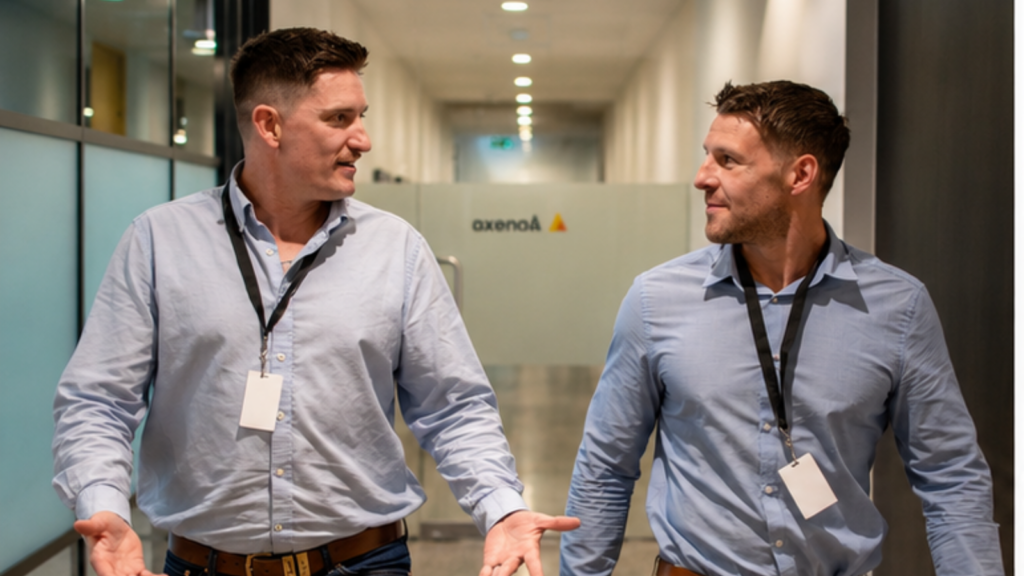
Louis runs NetSuite implementations for Annexa’s clients, which in practice means owning the outcome of a project from the moment it begins through to the point where the client is operating confidently on the new system. He is accountable for what gets built, for the team building it and for the relationship with the people paying for it.
The job has two halves that operate in parallel. Internally, it is a coordination function, holding together a team of consultants, other delivery leads and the head of services so that capacity, expertise and timing align. Externally, it is closer to an advisory role, with Louis sitting between the technical reality of what a client is building and the commercial outcome they are working toward.
The skills that matter most at this level are also the ones that are hardest to teach. Commercial judgement, the ability to read a room, knowing when to push and when to listen and when to bring someone else into the conversation – these are the qualities that separate a delivery lead who is technically capable from one who consistently produces good outcomes for clients. Technical fluency in the product is assumed at this stage of the career so what sets the role apart is the layer of judgement that sits above it, which is exactly the layer Annexa is set up to develop in its people.
A working day in Louis’s life

7:30am – Open emails from clients across Melbourne, Sydney, Brisbane and New Zealand. Because he manages New Zealand team members who are two hours ahead, an early start means catching them before their morning is half gone.
8:00am – First meeting of the day. One-on-one mentoring session with a New Zealand-based consultant, working through a structured development plan. Today’s focus is how they are framing requirements back to clients.
8:30am – A quality gate review of a solution design before it goes to the client.
9:00am – Portfolio review with his manager, walking through where each engagement sits.
10:30am – Pre go-live check-in with a client’s finance lead, walking through a process refinement together. These conversations are part of getting an implementation right, ensuring the system supports the business the way it was designed to.
12:00pm – A quick lunch and a walk with the dog to clear the head before the afternoon block.
1:00pm – Partnership catch-up with the customer success team about a prospective client.
1:30pm – A potential issue surfaces on one of Louis’s accounts. He calls the client directly, walks them through what he is seeing and they agree on a clear plan for what happens next.
2:30pm – A working session with one of his consultants on a piece of solution design.
3:30pm – A scheduled review with a client a few months into a new engagement. A walk through where the project is, where it is heading and what they need from Annexa over the next phase of work.
4:00pm – A final round of emails and a few replies to internal Slack messages before signing off. An early start means an early finish.
What Louis looks for in a good day

“The most important skill in this job is expectation management. With clients, with your team, with yourself. If everyone knows what’s happening and why, almost any problem is manageable.”
A good day, by Louis’s own measure, is one where the day works as it should. The team is moving, the clients are informed and Louis is operating where he adds the most value, which is in judgement, oversight and the conversations that need a senior person in the room. The shift from doing the work to leading the work is the part of the job that takes the longest to learn and it is the part that distinguishes a delivery lead who is technically capable from one who builds a high-performing team around them. Ten years in, that is the part of the job Louis still finds the most rewarding.
Thinking about a role like this?
If you are considering a role like this, it is worth knowing the kind of person who tends to thrive in it – someone who is comfortable without having every answer and is good at finding the colleague who does, who can hold context across multiple clients at once without losing the thread, and who is willing to have conversations early rather than wait for problems to resolve themselves. We say all this because we trust our people with real client work early on, you’re not going to spend a year shadowing someone before you’re allowed to do the job.
If that sounds like the kind of work you want to be doing, our open roles are on the Life at Annexa page on LinkedIn.
What are you reading right now?

Measure What Matters by John Doerr – a book about OKRs (objectives and key results) and how the world’s best organisations set goals thatactually driveoutcomes. Louis has found it particularly relevant for thinking about how to structure team performance and client delivery in a way that connects day-to-day work to meaningful results.